
Forestry Mulching Per Acre in Granbury, TX
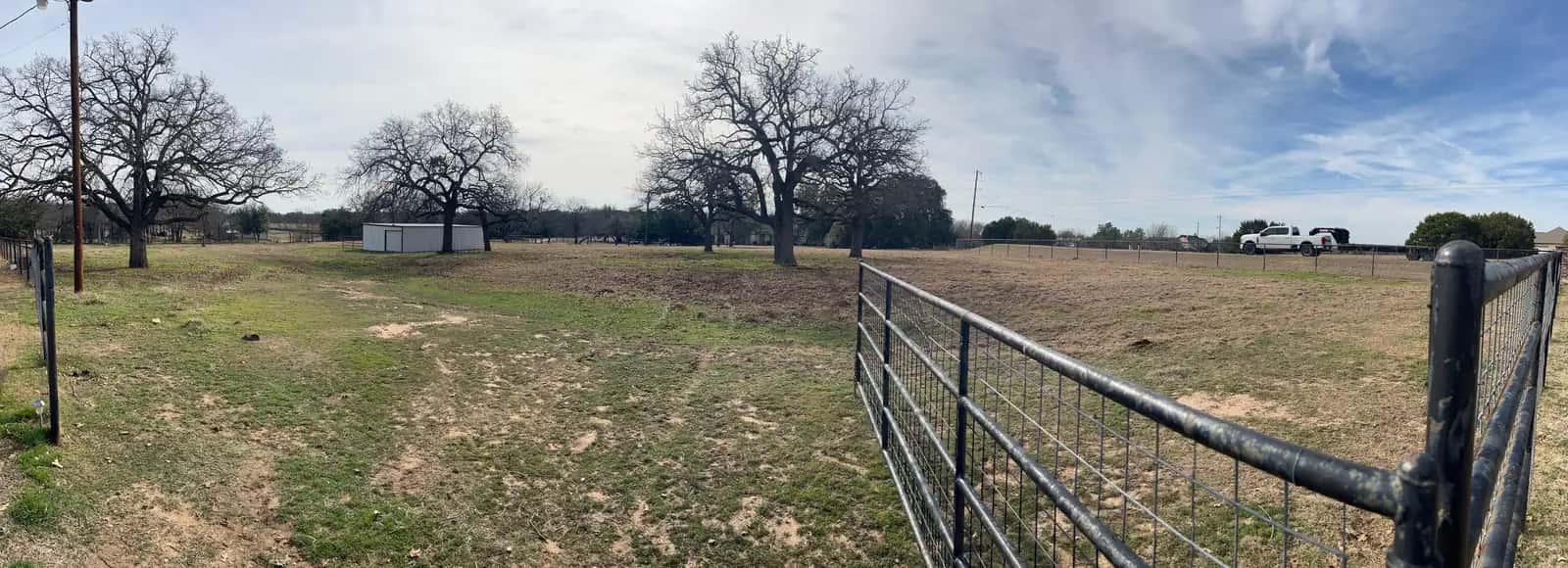
Cedar and mesquite don't take a pasture all at once. They take it a few feet a year, until the grazing ground you counted on is half what it used to be. Black Knuckle Land Management offers forestry mulching per acre for ranch and acreage owners around Granbury, reclaiming pasture, hay meadows, and hunting ground from the brush that's been creeping in. From tracts along the Brazos River to rolling country west toward Lipan and Stephenville, we grind brush in place so the grass has room to come back.
What Acreage Forestry Mulching Actually Involves
Acreage forestry mulching is brush and tree removal at pasture scale, grinding encroaching woody growth across multiple acres so the land can go back to grass. The typical before state in the Cross Timbers is gradual loss: scattered cedar that became thickets, mesquite spreading from fence rows into open ground, and pasture that now carries fewer head than it used to.
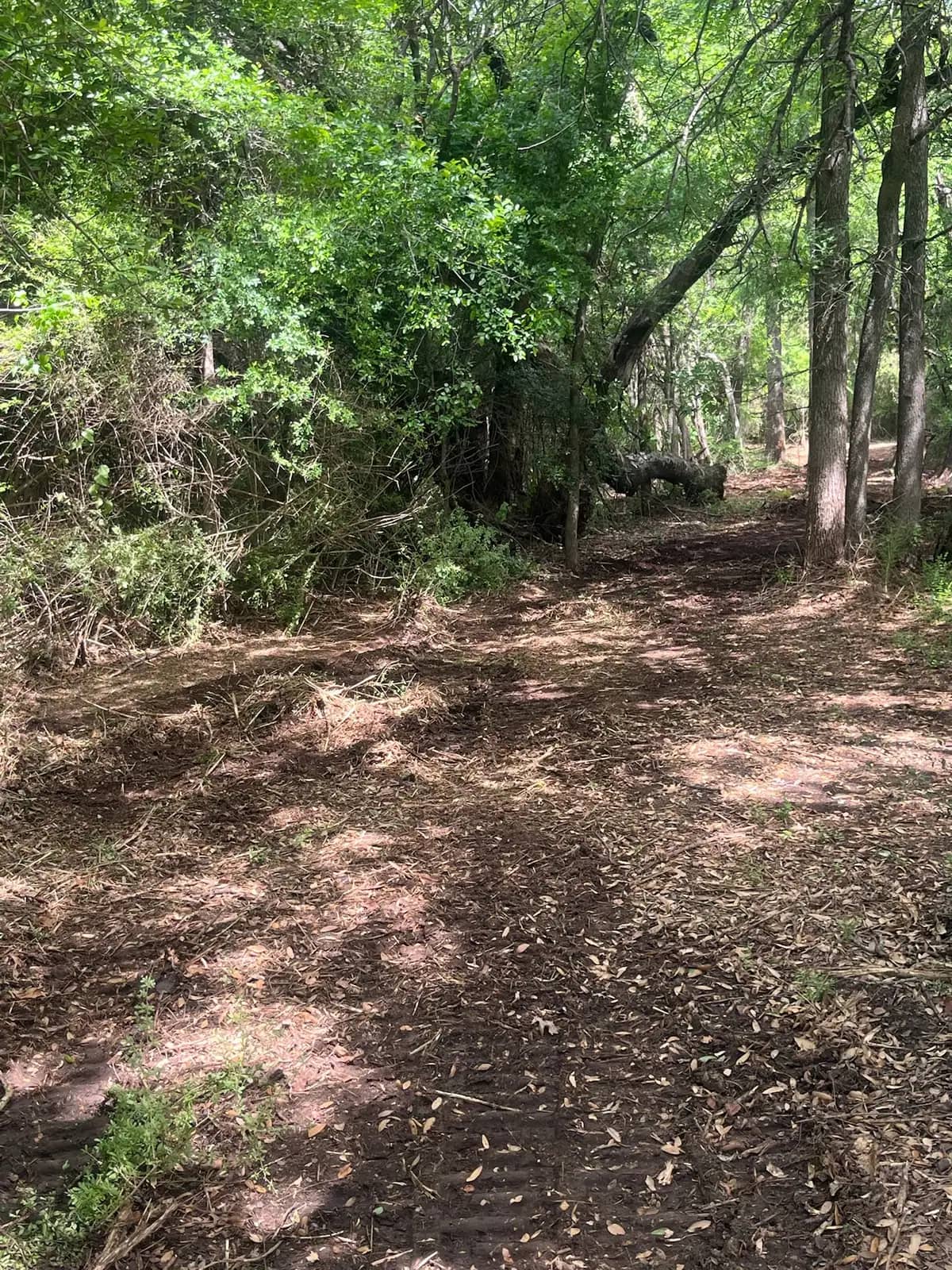
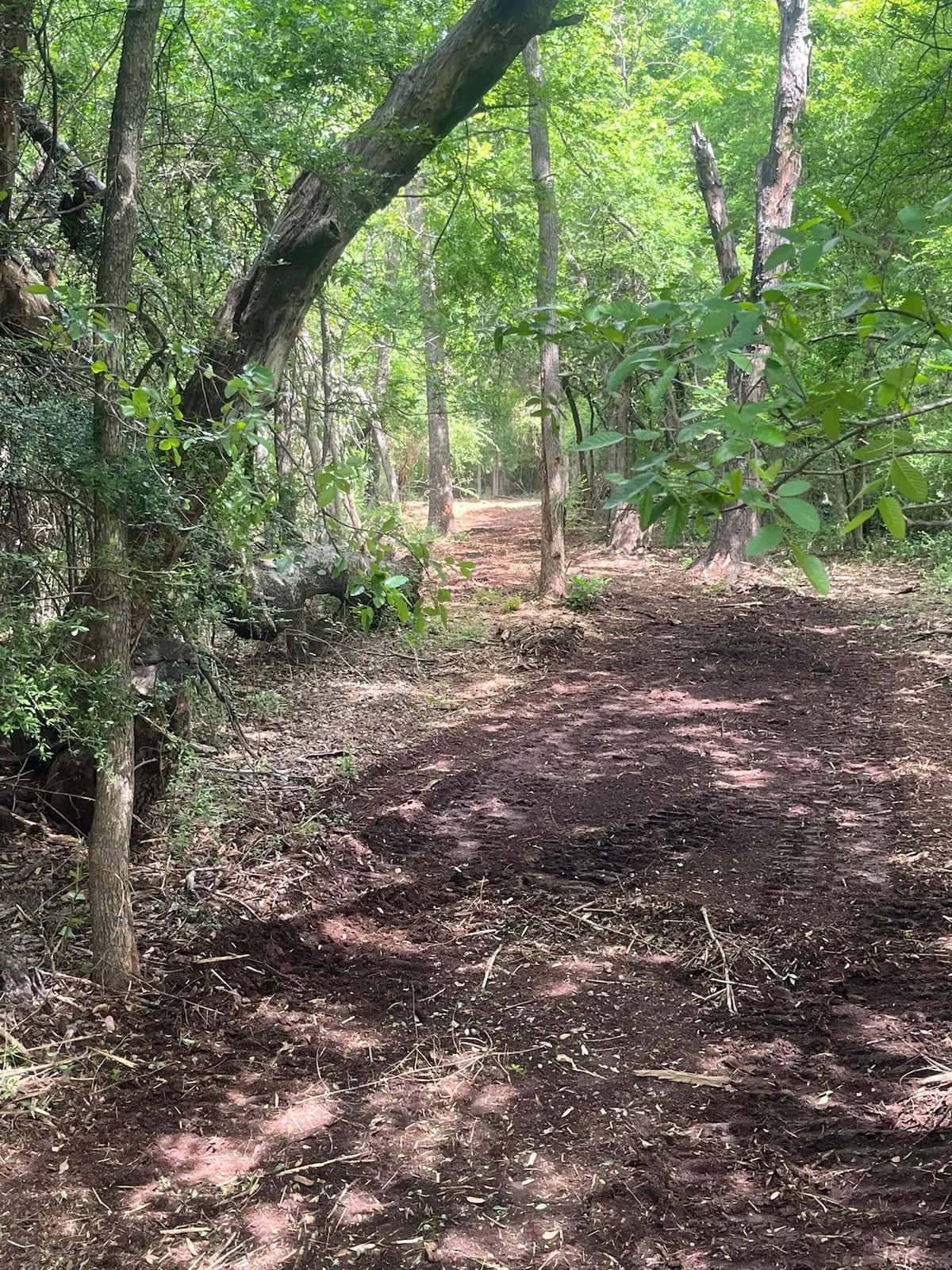
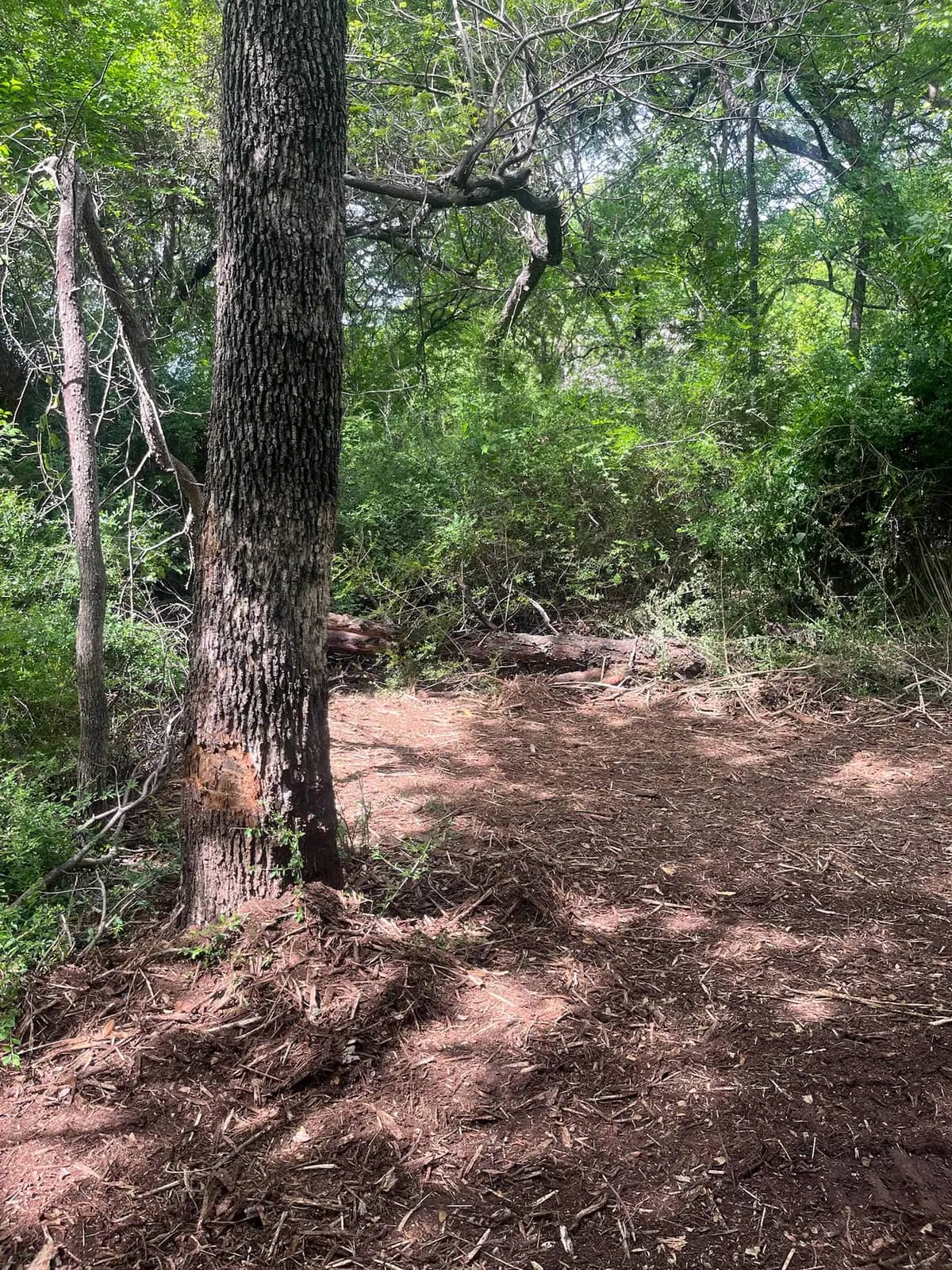
Our operator runs a high-flow skid steer with a forestry mulching head in systematic passes across the tract, working the heaviest brush first and then sweeping lighter areas. Trees up to roughly 8 to 10 inches in diameter, depending on species, are ground to chips and the stumps taken down near grade. Any shade trees, fence-row oaks, or wildlife cover you want to keep are marked and left standing. The mulch spreads across the ground, holding moisture and protecting bare soil while grass recovers. Production depends on brush density, rock, and slope. Skid steer mulchers commonly clear about 1 to 4 acres a day, faster in light brush and slower in dense cedar on limestone. The after is open, grazable ground with sight lines across the pasture, no burn piles to manage, and the topsoil still where it belongs.
Our Acreage Mulching Process
- 1
Walk the Tract and Map the Brush
We walk or drive the property with you and sort it into zones: heavy cedar, scattered mesquite, fence rows, and open ground with only light brush. We mark keeper trees, water sources, and livestock areas. Mapping the brush this way is what makes a per-acre estimate accurate instead of a guess.
- 2
Price by Zone, Not by Guess
Your estimate reflects the density and terrain of each zone, because an acre of scattered mesquite and an acre of solid cedar on a rocky slope are very different jobs. We'll also tell you where your money goes furthest if you want to phase the work over more than one season.
- 3
Plan Around Livestock and Seasons
We schedule around your grazing rotation so animals are out of the work area, and we avoid saturated ground that would rut. On tracts with oaks, we discuss timing to avoid the February-through-June oak wilt risk window where practical.
- 4
Clear in Systematic Passes
The operator works each zone methodically, starting with the heaviest brush and finishing with sweeps across lighter areas. Fence rows are cleared to an agreed width so the fence can be repaired or rebuilt. Keeper trees and wildlife cover stay standing.
- 5
Final Cleanup and Recovery Plan
We go over the cleared acreage and clean up missed stems before we leave. You get back open pasture with mulch protecting the soil while grass recovers. We'll also walk you through a follow-up plan, since mesquite resprouts and a maintenance pass in a year or two protects your investment.
Acreage Clearing Around Granbury and the Surrounding Counties
Most of our acreage work sits within about an hour and a half of Granbury. That includes Hood County ranchland around Lipan, Tolar, and Cresson, Somervell County tracts along the Paluxy River near Glen Rose, and pasture in Erath County off US-377 toward Stephenville. We also cover Johnson County near Cleburne, Parker County around Weatherford and Springtown, and ranch country deeper into Palo Pinto County.
This is Cross Timbers and Prairies country, where native grass pastures have been losing ground to Ashe juniper and mesquite for generations. The same limestone that makes Glen Rose famous slows mulching on rocky hillsides, while deeper bottomland soils along the Brazos River clear faster and green up quickly. For a look at everything our crew handles, visit the Black Knuckle Land Management homepage.
Why Ranch and Acreage Owners Choose Black Knuckle
We run a ranch ourselves. Black Knuckle Land Management grew out of the Black Knuckle Ranch, and we bought our first skid steer to clear our own pasture before putting it to work for neighbors in 2025. We understand grazing rotations, fence repairs, and why a cleared pasture only matters if the grass comes back. Our operators brought prior heavy-equipment experience, and you'll deal directly with the crew doing the work. Read more about our ranch roots.
Brush management can also support how your land is taxed. Under Texas wildlife management valuation, brush management is one of the recognized habitat-control practices, and qualifying landowners must carry out practices from at least three of seven activity categories each year. Texas Parks and Wildlife's wildlife management guidelines for the Edwards Plateau and Cross Timbers explain the requirements. Talk with your county appraisal district before counting any clearing toward a valuation, and keep before-and-after photos and dated invoices from every job. We're happy to provide both.
We'll also be straight with you about long-term control. Texas A&M AgriLife's Brush Busters program focuses on managing resprouting species like mesquite, because mechanical clearing alone rarely ends the fight. We'll tell you which species on your tract will come back. And if the clearing reveals ranch roads that need work, our crew handles driveway reconditioning and gravel work too. Estimates are free, and our hours are Monday through Saturday, 9 a.m. to 5 p.m.
See the Work in Motion
Swipe or tap the arrows to see more clips.
Forestry Mulching Per Acre FAQs
Ready to take your pasture back? Request a free acreage estimate or call (254) 269-6960. You can also read about forestry mulching and how it compares to other clearing methods.
How much does forestry mulching cost per acre?
Per-acre cost depends mostly on brush density, tree size, rock, and slope. Light, scattered brush on flat pasture costs far less per acre than thick cedar on a limestone hillside. National averages vary widely, so the only useful number is one based on walking your land. That's why our estimates are free and on site.
How many acres can you clear in a day?
Skid steer mulchers typically clear about 1 to 4 acres a day. Light brush on open ground sits at the high end, while dense cedar, rocky ground, or steep slopes can drop to an acre or less. We'll give you a timeline with your estimate.
Will grass come back after mulching?
In most Cross Timbers pastures, yes. Grass roots stay in the ground because mulching doesn't scrape or plow the soil. Where mulch is thin, recovery is usually fastest. Very thick mulch under former cedar stands can slow regrowth for a season, and some owners reseed with native grasses to speed it up.
Does brush clearing count toward agricultural or wildlife valuation?
Brush management is a recognized habitat-control practice for wildlife management valuation in Texas, but qualification depends on your plan, acreage, and your appraisal district's rules. Check with your county appraisal district, and keep our dated invoices and photos for your records.
Is mulching cheaper than dozing and burning?
Dozing can be faster per acre on large, open tracts, but it strips topsoil, leaves piles to burn or haul, and can be halted by burn bans. Mulching often costs less overall once cleanup, burning restrictions, and pasture recovery are counted, especially on small and mid-size tracts.
Serving Granbury and the Surrounding Area
We're based in Granbury and work within about an hour to an hour and a half of home.
Ready to Clear Your Land?
Whether it's overgrown acreage, a pasture that needs mowing or a driveway that washes out every rain, we'll give you an honest assessment and a fair price. Every estimate is free, and we cover Granbury and the surrounding area within about an hour and a half.